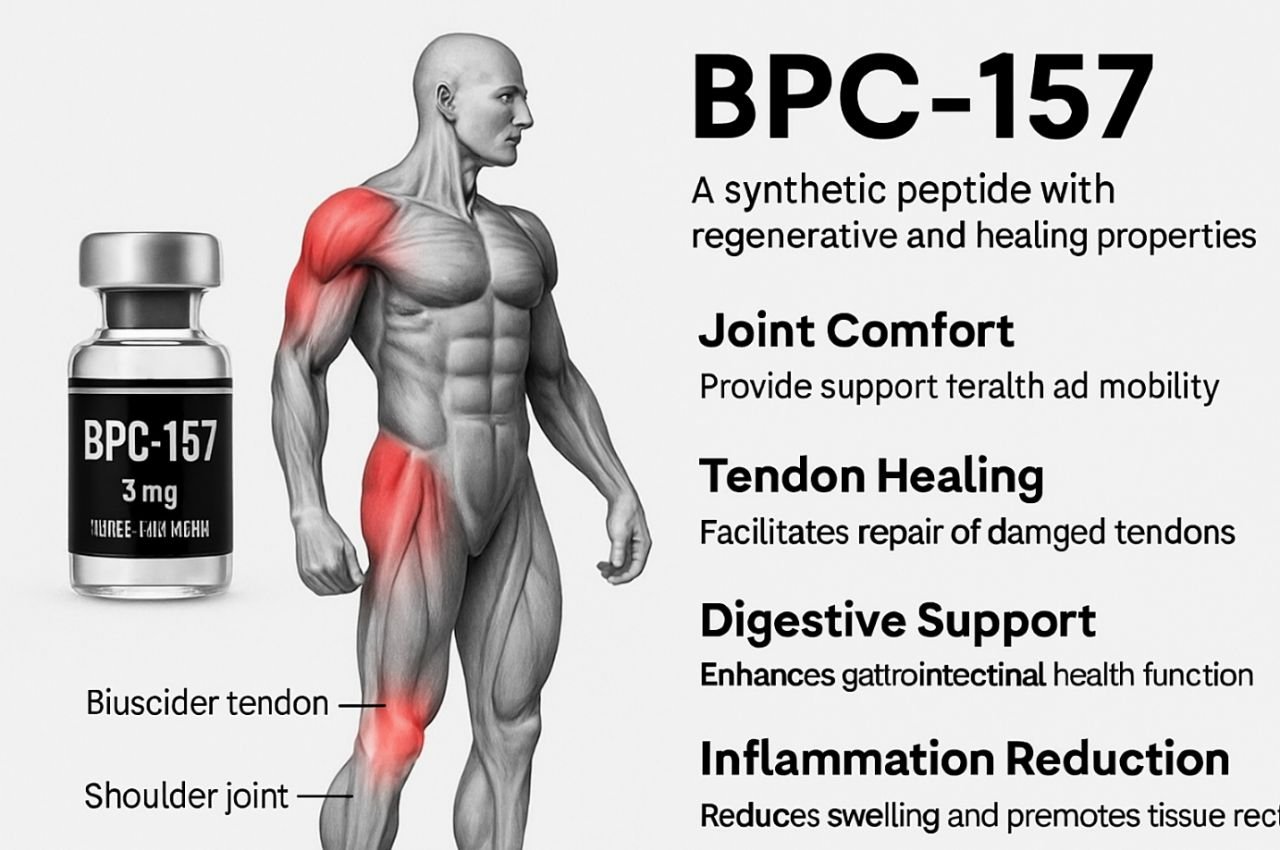
Interest in peptides has grown dramatically as more people seek ways to improve repair, resilience, and long-term physical function. Among all the peptides discussed today, BPC-157 stands out for its unique profile and broad potential application. Whether someone is dealing with tendon irritation, digestive sensitivity, stress-related discomfort, or simply slower recovery due to age or workload, BPC-157 has become a topic worth exploring. Anyone researching this peptide often finds resources like https://bigboy-shop.com/product-category/peptide/bpc-157/ helpful for understanding what the peptide offers and how people typically use it.
Although BPC-157 is still considered a research peptide, its growing popularity stems from how consistently people describe improvements in tissue comfort, mobility, and recovery. It is not used as a stimulant, not a hormone, and not a pain-masking drug. Instead, it supports biological repair mechanisms that may already be happening in the background but aren’t progressing efficiently due to stress, injury, or inflammation.
This article offers a fresh, broad, and comprehensive look at BPC-157: where it comes from, how users describe its effects, what systems it appears to influence, how people generally use it, and what considerations matter most. It is written as a standalone piece with completely new phrasing and structure.
Understanding BPC-157: What It Represents in Recovery Science
BPC-157 is a synthetic peptide modeled after a natural component found in the stomach’s protective environment. The stomach is one of the body’s fastest-healing organs, constantly exposed to acid, stress hormones, and immune responses. The protective compounds in gastric juice help maintain this resilience, and BPC-157 is based on one such compound.
What makes this peptide particularly interesting is its ability to influence healing beyond the digestive tract. People are drawn to it because it seems to connect multiple systems:
- Muscle tissue
- Tendons and ligaments
- Joints
- Gastrointestinal lining
- Nervous system
- Circulatory pathways
While the peptide is not a medication and not approved as a medical treatment, the patterns observed around its use have made it one of the most discussed recovery tools in both performance and wellness communities.
Why BPC-157 Has Become So Widely Discussed
The reason for the growing interest can be traced to a simple truth: modern life places heavy demands on the body.
People train more, sit more, stress more, and expect more from their bodies than ever before. With these demands come problems:
- Persistent tendon stiffness
- Slow healing after workouts
- Joint discomfort from repetitive movements
- Digestive irritation from stress, diet, or medication
- General fatigue from poor recovery
Traditional solutions often involve rest or medication, but these do not always address the deeper issues. A peptide that appears to support the body’s natural repair signals fills an important gap.
Several factors explain the surge in attention:
1. Interest in non-pharmaceutical recovery tools
People want solutions that complement lifestyle habits rather than override the body’s natural responses.
2. Increased visibility through sports and athletic communities
As more athletes talk about recovery peptides, the general public becomes more curious.
3. A rise in chronic low-grade inflammation
Everything from office work to poor sleep influences inflammation. A peptide that may support balance attracts those seeking long-term relief.
4. Greater awareness of gut health
Since BPC-157 has a natural connection to digestive protection, it stands out for people managing stomach-related discomfort.
How BPC-157 Interacts with the Body
Every peptide interacts with the body through signaling. Rather than forcing growth or aggressively blocking a pathway, peptides serve as communication tools. They guide the body to improve processes that may be functioning suboptimally.
A. Support for Tissue Repair
Many users describe faster recovery in areas associated with slow-healing structures:
- Tendons
- Ligaments
- Connective tissues
- Cartilage surfaces
- Muscle fibers
These tissues typically have low blood flow, making the healing process longer and more difficult. BPC-157 is often explored because it appears to encourage blood vessel formation, improve nutrient delivery, and support structured repair rather than chaotic tissue rebuilding.
B. Influence on Inflammation Balance
Inflammation is necessary for healing but harmful when prolonged. People dealing with repetitive strain injuries often live in a state where inflammation never fully resolves.
BPC-157 is frequently discussed in the context of:
- Calming overactive inflammation
- Supporting recovery without suppressing adrenal function
- Helping tissues transition out of the inflammatory stage
What makes this peptide appealing is the idea of supporting balance without interfering with hormones.
C. Support for the Gastrointestinal Environment
Because the compound originates from stomach protective factors, many users turn to BPC-157 for digestive reasons such as:
- Sensitivity after certain foods
- Irritation from stress
- Discomfort following medication or surgery
- Occasional bloating or unpredictability
People often describe improvements in gut comfort and overall digestive stability, making BPC-157 a favored peptide among those concerned with both performance and daily wellness.
D. Possible Neurological and Cognitive Effects
Another area of interest is its influence on mental resilience. While experiences vary widely, reports often include:
- Better stress management
- A smoother transition into relaxation
- More stable mood
- Increased ability to focus
- Reduced mental fatigue
This suggests that BPC-157 may interact with pathways involved in neural signaling and recovery from stress.
Major Benefits Users Commonly Describe
Although every individual’s experience is unique, several themes consistently appear across discussions:
1. Improvements in Joint Comfort and Mobility
People who work out regularly or engage in physical labor often struggle with joint discomfort. BPC-157 is frequently associated with smoother motion, especially in areas like:
- Knees
- Shoulders
- Elbows
- Ankles
Users often mention that stiffness decreases gradually and mobility becomes more natural.
2. Better Tendon and Ligament Resilience
These structures heal slowly, and minor issues can become long-term problems. BPC-157 is widely discussed for its potential to help:
- Chronic tendon irritation
- Micro-tears
- Overuse injuries
- Repetitive strain problems
Improvements are often reported beginning around the second week of consistent use.
3. Enhanced Muscle Recovery
Muscle tissue generally heals faster than tendons, but intense training, poor sleep, or high stress slow the process. Many people describe:
- Reduced post-workout soreness
- Faster return to training
- More balanced muscle tension
This enhancement is often linked to improved circulation and tissue support.
4. Digestive Support and Stability
Because the peptide is connected to gastric protection, users dealing with digestive sensitivity often notice:
- Less irritation
- Calmer digestion
- Fewer disruptive symptoms
- Improved regularity
This makes BPC-157 appealing beyond sports performance alone.
5. Better Overall Resilience
When tissues heal properly and inflammation stays controlled, general wellness improves. People commonly describe:
- More consistent energy
- Better sleep quality
- Quicker adaptation to daily stress
- A sense of returning to physical balance
These broad effects contribute to BPC-157’s wide popularity.
How People Use BPC-157 in Practical Settings
Because BPC-157 is not an approved medical treatment, there are no official guidelines for its use. Instead, communities rely on shared experiences and careful structured approaches.
Below are the most common ways individuals organize their routines:
Systemic Use
Those focusing on whole-body inflammation, digestive stability, or general recovery often choose oral intake methods. The idea is to support the digestive system and system-wide processes simultaneously.
Localized Use
When dealing with a specific injury—tendon strain, joint irritation, ligament damage—users often report exploring targeted administration near the affected area. This approach aims to create a concentrated effect where recovery is needed most.
Usage Duration
Typical cycles described in community practice include:
- 2–4 weeks for minor needs
- 4–6 weeks for deeper or longer-standing concerns
- Breaks between cycles to allow the body to reset
Consistency appears more important than high amounts. Users who maintain daily routine tend to describe clearer results.
Safety Considerations and Sensible Usage
As with any compound that influences the body, safety is a priority.
General Tolerance
Reports commonly note that BPC-157 is well tolerated. Mild temporary reactions may include:
- Redness at administration sites
- Increased appetite
- Mild fatigue
- Small digestive shifts
These usually fade as the body adapts.
Quality Matters
Peptides require precision and purity. Users often emphasize the importance of:
- Choosing reliable suppliers
- Verifying product quality
- Avoiding unknown or low-quality sources
High-purity peptides reduce unnecessary risks.
Moderation and Mindfulness
Those who experience the best outcomes usually approach BPC-157 with intentional planning:
- Starting conservatively
- Monitoring how the body responds
- Adjusting routines based on results
- Avoiding complicated stacks unless guided by a professional
Responsible use is key to long-term benefits.
Why BPC-157 Fits Today’s Recovery Philosophy
Modern recovery is not just about reducing pain. It is about optimizing the body’s ability to function smoothly under daily demands. BPC-157 fits this approach because it appears to support fundamental repair rather than offering surface-level relief.
People who explore the peptide value it because it aligns with important goals:
- Restoring mobility
- Maintaining digestive strength
- Supporting joint health
- Improving adaptation to stress
- Enhancing the body’s natural healing capabilities
This combination of qualities has made BPC-157 one of the most talked-about peptides in recent years.
Who Finds BPC-157 Particularly Useful?
While not appropriate for everyone, certain groups are especially drawn to its potential:
1. Athletes and Fitness Enthusiasts
Training volume, intensity, and repetition place significant strain on connective tissue. BPC-157 is frequently mentioned as a supportive addition to recovery routines.
2. Individuals With Chronic or Repetitive Injuries
Long-term discomfort in tendons or joints makes everyday life difficult. The possibility of structural support is appealing.
3. People With Digestive Sensitivity
Since the peptide’s origin lies in gastric protective factors, those dealing with digestive irritation often explore it.
4. High-Stress Professionals
Chronic stress weakens recovery and digestion. BPC-157 is increasingly discussed among people who want a more balanced physical response to long work hours.
Legality and Practical Responsibility
The regulatory status of BPC-157 varies by region. In many places, it is considered a research compound rather than a product intended for medical treatment. Users must stay informed about what is allowed in their country.
Choosing legitimate suppliers ensures:
- Consistency
- Clean manufacturing
- Transparent handling
This is why many users prefer established peptide sources that categorize BPC-157 strictly for research purposes.
Final Thoughts: The Role of BPC-157 in Future Recovery Strategies
BPC-157 has sparked global interest because it aligns with what people increasingly want from health and wellness tools: natural support, structural repair, digestive resilience, and improved physical balance. Its wide-ranging influence across tissues and systems gives it a unique place in the world of peptides.
People don’t explore BPC-157 simply because they want to recover faster—they do it because they want to recover better. They want deeper repair, not temporary relief. They want mobility, not restrictions. They want sustainable comfort that allows them to live and perform at their best.
As research continues and real-world experiences accumulate, BPC-157 will likely remain a central point of discussion for those seeking advanced recovery strategies. For many, platforms like https://bigboy-shop.com/product-category/peptide/bpc-157/ provide a starting point for exploring what this peptide can offer in a responsible and informed way.