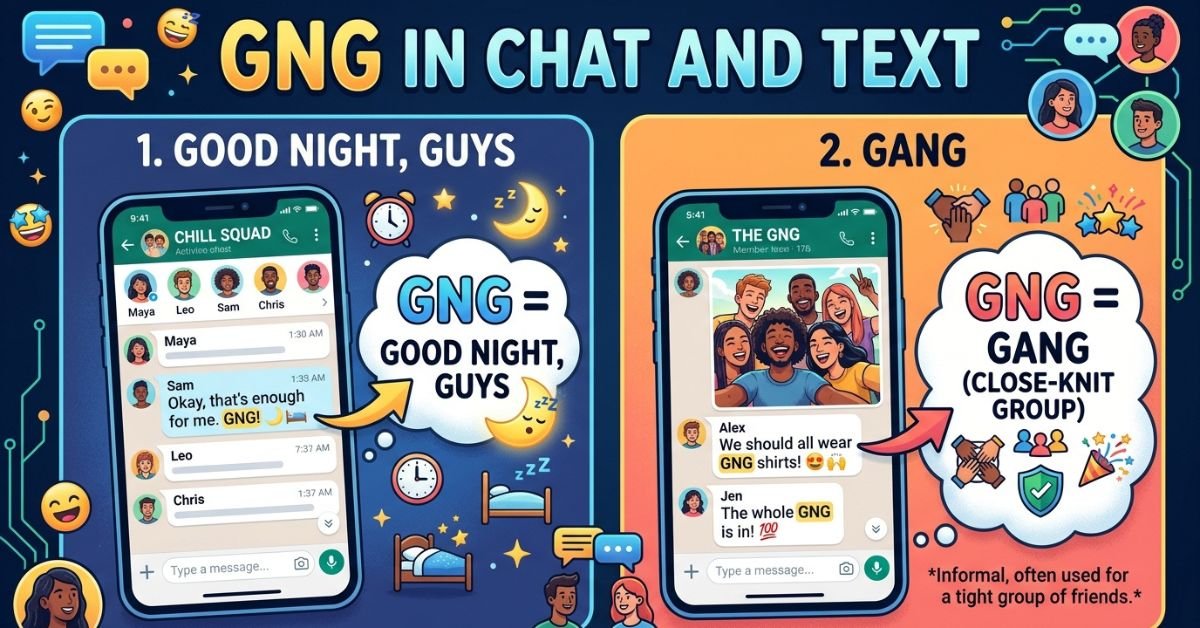
You’re scrolling through a group chat and someone drops “GNG” like it’s nothing. No explanation. No context. Just three letters floating there like everyone’s supposed to know. Maybe you nod along. Maybe you Google it later. Either way, you’re here now, so let’s actually break this down properly.
The Short Version First
GNG stands for “Gang.”
That’s it. That’s the whole meaning. Someone typing GNG is saying “gang” without typing the vowels because apparently we’re all too busy for vowels in 2026.
But here’s where it gets interesting. The word “gang” in this context has absolutely nothing to do with crime, violence, or anything you’d see on a true crime documentary. It’s slang for your people. Your crew. Your circle. The ones you text at 2 AM about nothing important.
Why “Gang” Became a Term of Endearment
Language does weird things over time. Words that sound aggressive often become the softest terms of affection. Think about it. Friends call each other “bro,” “dude,” “homie,” “fam.” All of these started somewhere else and got repurposed into warmth.
“Gang” followed the same path. Hip-hop culture started using it in the 80s and 90s to describe loyalty and brotherhood. Rappers would shout out their “gang” meaning their day-one friends, their neighborhood, their support system. Over time, that usage spread into everyday speech, and by the time social media took over, “gang” had fully transformed into a casual way to address people you care about.
GNG is just the text-message version of that word. Same energy, fewer letters.
How People Actually Use GNG
Let’s get practical. Here’s what GNG looks like in real conversations:
Scenario 1: Hype
Friend: “I finally passed my exam”
You: “LET’S GO GNG 🔥”
Translation: I’m celebrating with you and we’re in this together.
Scenario 2: Group address
“GNG where we eating tonight”
Translation: Hey everyone in this chat, I’m talking to all of you at once.
Scenario 3: Sign-off
“GNG I’m heading to bed, talk tomorrow”
Translation: Goodnight to all of you, I appreciate you.
Scenario 4: Support
“That’s rough GNG, you good?”
Translation: I see you struggling and I’m here for you.
Notice something? In every single example, GNG is doing the same job. It’s creating closeness. It’s saying “you’re part of my circle” without actually saying those words.
The Platform Differences Nobody Talks About
Here’s where things get nuanced, and this is the part most articles skip.
On TikTok: GNG is how creators address their audience. “Thanks GNG for the support” makes thousands of viewers feel like they’re individually acknowledged. It’s community-building language.
On Snapchat: GNG sometimes means “Goodnight Gang.” A quick “GNG everyone” at the end of a long chat is both a farewell and an affirmation that the group matters.
On Discord and gaming servers: GNG is the squad. “GNG is online” means the crew is ready to play. “GNG afk” means someone stepped away. It’s functional, not just social.
On WhatsApp and iMessage: GNG replaces listing names. Instead of “Hey Mike, Sarah, and Jake” you just say “GNG.” It’s efficient and it feels warmer than a dry group address.
On Instagram: GNG shows up in comments and DMs as a support marker. “Love this GNG” or “Appreciate you GNG” carries the same energy as calling someone “bestie.”
The Other Meaning You Might Encounter
Here’s the plot twist. In some fast-typing situations, GNG also means “going.”
Examples:
“I’m gng to the store”
“gng offline for a bit”
This usage is less common but it exists, especially in gaming chats and texts between people who type quickly and don’t proofread.
How to tell the difference:
- If GNG is addressing someone, it means gang. “You wild GNG”
- If GNG is describing an action, it means going. “gng to work now”
Position in the sentence usually gives it away. GNG at the end or standing alone? Gang. GNG at the start followed by a destination? Probably going.
When You Should and Shouldn’t Use GNG
GNG works when the vibe is already casual and warm. Texting close friends, hyping someone up in comments, group chats where slang is normal. These are all natural GNG contexts.
GNG does not work in professional emails, first messages to strangers, or serious conversations. Dropping “GNG” on your boss or someone you just met is like calling them “bro” on a first date. It’s presumptuous and it lands wrong.
The test is simple. Would you call this person “fam” or “bro” out loud? If yes, GNG fits. If no, save it.
The Deeper Point
GNG isn’t just slang. It’s a tiny linguistic invention that solves a real problem. How do you make a group chat feel personal? How do you address a crowd without sounding robotic? How do you signal warmth in three letters?
GNG does all of that. It’s efficient, it’s inclusive, and it carries real emotional weight despite being almost aggressively short.
So next time someone hits you with “GNG” in a text, you’ll know exactly what they mean. They’re not talking about crime. They’re not being aggressive. They’re just saying, in the fastest way possible, “You’re one of my people.”
And honestly? That’s kind of nice.